Avi Gupta’s Spiti Valley Journey with Thrillophilia: Where a Road Trip Became a Lesson in Local Life

Thrillophilia Verified Booking
PNR: BKD2FNFETSI
Traveller: Avi Gupta
Trip Duration: 9 Days | 8 Nights
Destination: Spiti Valley
Date of Travel: 14 Jun 2025 - 22 Jun 2025
Package Booked: 9 Days Spiti Group Tour Package
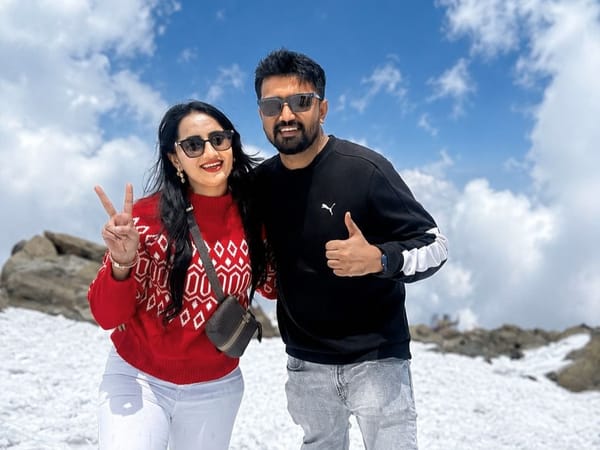
A Spiti road trip can give you dramatic landscapes, impossibly high villages and roads that seem to disappear into the mountains. But for Avi Gupta and Prakriti Priya, it offered something less expected too: a chance to connect with the people who call these mountains home.
Their nine-day journey began in Chandigarh and gradually climbed through Narkanda and Chitkul before entering the stark landscapes of Spiti. Along the way came riverside drives, remote villages, ancient monasteries, high-altitude passes and nights beneath Himalayan skies. But somewhere between the winding roads and unfamiliar places, their guide Vikas became more than the person leading the journey.
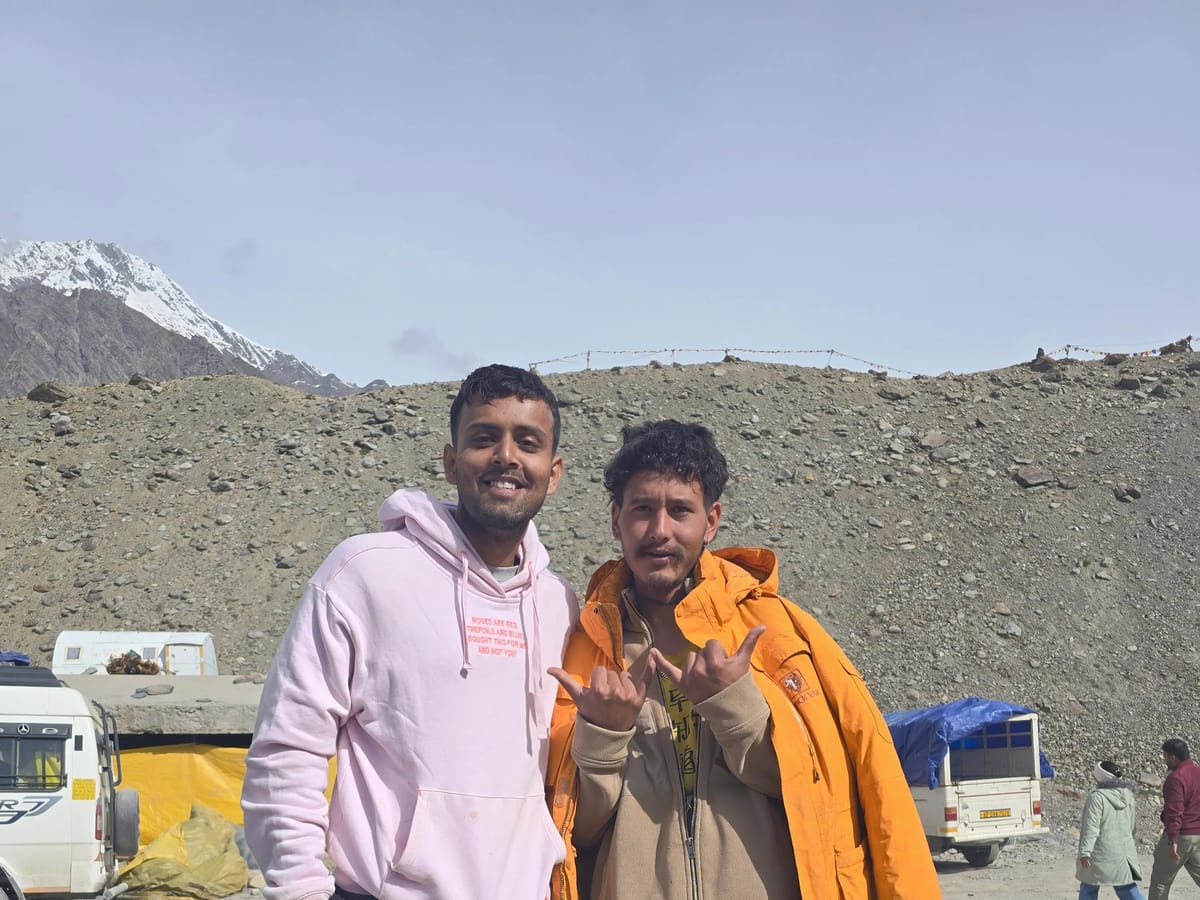
As Avi put it, he became “more of a friend", someone from whom he learned along the way. And that sense of connection became one of the defining parts of their Spiti experience.
From Chandigarh to Chitkul: The Himalayas Begin to Unfold
The journey eased into the mountains through Narkanda, known as the “Apple Capital of India", where apple and cherry orchards replaced the bustle of Chandigarh. The next day brought a more dramatic change as the route entered Kinnaur Valley, following the Sutlej River towards Chitkul.
At Karcham, the road turned towards the Baspa Valley, eventually reaching Chitkul, one of India's last inhabited villages before the Indo-Tibetan border. With the Baspa River flowing nearby and towering mountains enclosing the settlement, it was the first real taste of the remoteness that awaited deeper inside the Himalayas.
A stop at Hindustan Ka Akhri Dhaba added a wonderfully local touch to the journey. It was the kind of place where a simple meal or cup of tea felt like part of the adventure rather than just a break from it.
Nako, Kaza & The Road Into Another World
From Chitkul, Avi and Prakriti continued towards Nako, crossing the famous Khab Sangam, where the Spiti and Sutlej Rivers meet. Nako Lake offered a quieter moment, surrounded by mountains and the village's traditional architecture, while Nako Monastery provided an early glimpse into the Buddhist culture that defines the valley.
The next stretch towards Kaza brought some of Spiti's most fascinating history. At Gue Monastery, they encountered the famous naturally mummified monk, before reaching Tabo Monastery, whose roughly thousand-year-old murals and structures have earned it the name “Ajanta of the Himalayas.” Dhankar Monastery, dramatically positioned above the valley, added another unforgettable perspective before the journey continued towards Kaza.
This was also where Vikas's role became particularly valuable. Rather than simply pointing out attractions, he helped Avi understand the places they were passing through, turning the journey into a learning experience as much as a sightseeing one.
Life at the Top: Langza, Hikkim & Komik
Kaza became the base for exploring some of Spiti's most extraordinary high-altitude settlements. At Key Monastery, perched high above the Spiti River, Avi and Prakriti could take in sweeping views alongside one of the valley's most important Buddhist institutions.
Then came Langza, with its enormous Buddha statue overlooking the mountains, followed by Hikkim, home to the world's highest post office at around 4,400 metres. At Komik, one of the world's highest inhabited villages, the scale of the surrounding landscape made everyday life here seem almost unbelievable.
These places also revealed why Avi's experience with Vikas went beyond conventional guiding. The journey was not simply about ticking off Langza, Hikkim or Komik; it was about understanding how people live in settlements where altitude, weather and isolation shape almost every part of daily life.
Kunzum Pass to Chandratal: The Journey Peaks
The final major stretch took the travellers across Kunzum La, at around 4,550 metres, before descending towards the spectacular Chandratal Lake. The crescent-shaped lake, surrounded by the Chandra Bhaga range, appeared almost surreal against the barren Himalayan landscape.
After the intensity of the high mountain roads, Chandratal offered a quieter kind of beauty. The changing colours of the lake, vast open skies and a complete sense of remoteness made it one of those places where there was little to do except stop, look around and take it all in.
From there, the route continued through Sissu and the Atal Tunnel towards Manali. The barren mountains gradually gave way to greener valleys, marking a striking end to the Spiti landscape. After some time in Manali, Avi and Prakriti eventually made their way back towards Chandigarh, carrying with them far more than photographs of the mountains.
Why Avi Recommends His Spiti Journey with Thrillophilia
For a route as remote and demanding as Spiti, the experience depends on much more than the itinerary. At Thrillophilia, we focused on putting the logistics, local support and on-ground guidance in place so Avi and Prakriti could experience the valley without feeling like outsiders navigating it alone.
Their guide Vikas became an important part of that experience. Avi's words capture it best: “Vikas was a wonderful guide throughout the journey, more of a friend from whom I learned a great deal.” That is exactly the kind of local connection we want travellers to take away from a journey through Spiti.
And perhaps the most telling part of Avi's review was his final thought: “This journey is far from over.” Because sometimes a great mountain trip does not really end when you leave the mountains. It simply leaves you already thinking about when you will return.
Also Read: Nitin Kumar’s Spiti Valley Adventure with Thrillophilia